The Moon as a Training Ground for Deep Space
From “been there once” to long‑stay rehearsal
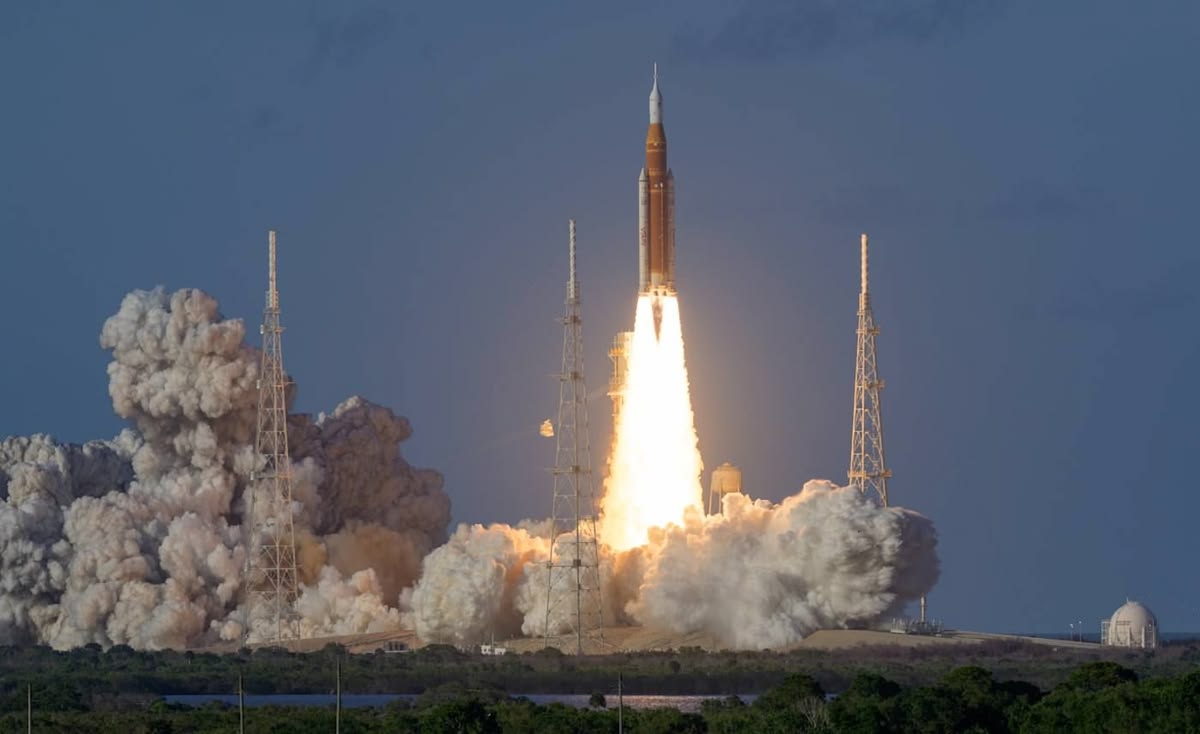
Landing on the Moon used to mean flags, footprints and a quick trip home. Now the focus has shifted to staying power: how to keep people alive, productive and able to return after weeks or months in deep space. The Moon’s distance is ideal for that rehearsal. It is far enough to stretch life‑support, navigation, radiation shielding and crew psychology beyond low‑orbit comfort zones, yet still close enough for emergency help. New crew vehicles ride heavy‑lift rockets into elongated lunar orbits, pushing every system—propulsion, thermal control, guidance and re‑entry—through a tougher “exam” than near‑Earth flights can offer.
Practicing the logistics of living away from Earth
Around and on the Moon, waves of cargo landers, robotic scouts and small science packages arrive ahead of crews. They test power networks, remote operations, fault‑tolerant electronics and autonomous repair, all built to survive brutal temperature swings and abrasive dust without technicians on site. Robots may deploy communication relays, navigation beacons and construction gear first, turning a bare landscape into a partly prepared worksite. When astronauts arrive, they refine layouts, run complex experiments and handle the unexpected. The blueprint is deliberate: automation builds the skeleton, humans tune and extend it—exactly the pattern needed later on Mars.
Why strange orbits suddenly matter
Mission designers now use paths that look nothing like simple circles: stretched ellipses, “figure‑eight” loops and near‑stable routes balanced between Earth and lunar gravity. These tracks trade fuel use, sunlight, temperature and radio coverage against risk. Some keep a station in constant view of Earth; others swing crews behind the Moon to simulate communication blackouts and decision‑making without real‑time support. The more confidently teams handle these exotic highways, the more realistic multi‑year expeditions to distant worlds become.
| Mission phase | Main focus in lunar region | How it helps later on Mars and beyond |
|---|---|---|
| Early fly‑bys and loops | Validate deep‑space life‑support, navigation, re‑entry | Reduces design guesswork for long cruises in deep space |
| Robotic cargo deliveries | Power, surface robotics, autonomous fault recovery | Builds template for resupply chains to remote outposts |
| Long‑stay crews | Health, teamwork, maintenance under isolation | Shapes training for highly independent crews |
Life and Work When Earth Is Far Away
Crews as small, autonomous societies
In low Earth orbit, a crew can lean heavily on controllers who answer within seconds. Farther out, delays stretch from many seconds to minutes, forcing crews to act more like a self‑governing village. Members train across multiple disciplines: piloting, engineering, medical care, environmental control, science and conflict management. Each specialist holds backup skills in two or three other areas so that a single failure or illness does not cripple the team. Simulations pile on “what‑if” crises—software glitches, sensor disagreements, air leaks—until calm collective decisions become a habit rather than a heroic exception.
The psychology of distance and delay
As a spacecraft drifts farther from home, the blue planet outside the window shrinks to a bright star. Conversations with family become stilted by delays, short messages replace relaxed chats, and social feedback thins out. Minor annoyances inside the cabin can feel magnified. Mission planners now treat mood, sleep patterns, privacy and recreation as core safety issues, not luxuries. Adjustable lighting mimics day‑night cycles, shared activities break up repetitive routines, and regular mental‑health check‑ins help crews process fear, boredom and awe without burning out. All of this gets rehearsed first on extended lunar trips.
Quiet Machines: The Satellite Web Behind the Scenes
The invisible infrastructure that lets people stay
Crewed missions attract the cameras, but uncrewed orbiters are what transform a brief visit into something closer to settlement. Communication relays around the Moon and along interplanetary routes act as waypoints for data, catching weak signals from landers or rovers and forwarding them home. Dedicated navigation craft establish a local “coordinate grid” so landing craft and roving vehicles can know where they are without relying solely on distant Earth tracking. Environmental survey satellites map terrain, temperature and potential resources—frozen water, useful minerals, safe landing plains—long before human boots arrive.
Why “quiet” satellites are so demanding
Deep‑space satellites must run for years with no servicing, little spare power and strict vibration limits. Any unnecessary motion or noise can disturb precise pointing and long‑exposure instruments. Careful thermal designs, gentle attitude control and generous redundancy help them survive radiation, micrometeorite hits and hardware fatigue. Some test laser links instead of traditional radio to squeeze more data through narrow power budgets. Others investigate beamed‑energy concepts that might one day send power to shadowed craters or remote camps without heavy cables.
Heavy‑Lift Rockets and In‑Space Transport
Building a highway out of the gravity well
Getting mass off Earth remains the hardest step. New generations of heavy‑lift boosters aim to push payloads by the dozens of tons rather than drip‑feeding them. Reusable first stages—and sometimes upper stages—fly repeatedly, driving down cost per launch and normalising the idea of frequent deep‑space cargo runs. Larger fairings let entire habitat modules, greenhouses or power systems ride up in one piece instead of as awkward jigsaw puzzles. For planners, that changes everything: it becomes realistic to schedule regular shipments rather than betting a whole decade on one or two giant attempts.
Smarter propulsion once you are already in space
Traditional chemical rockets are unmatched for liftoff, but they burn fuel fast. Once in orbit, more efficient engines take over, trading raw thrust for long, gentle pushes that gradually reshape trajectories. High‑efficiency electric or advanced thermal systems can adjust transfer paths to lunar or Martian orbits with less propellant, widening launch windows and creating flexibility for course corrections. In the long term, nuclear‑based concepts may power “hopping” vehicles that leap across rugged Martian landscapes or icy outer‑moon terrain, visiting many sites on one mission instead of a single landing zone.
| Transport element | Typical strengths | Role in long‑range exploration |
|---|---|---|
| Reusable heavy‑lift booster | Large payloads, lower cost per flight | Establishes steady logistics to Moon orbit and beyond |
| In‑space transfer stage | Efficient maneuvers, adaptable routes | Connects Earth orbit depots, lunar hubs and interplanetary paths |
| Surface “hoppers” or landers | Local mobility, rapid site access | Supports scouting, emergency supply and science at multiple locations |
Making Homes from Dust and Thin Air
Habitats, power and daily routines on alien ground
Both the Moon and Mars punish exposed machinery and unshielded skin with radiation, extreme cold and abrasive dust. Engineers are exploring how to turn local soil into building material through sintering, melting or binding, creating protective shells over lighter, inflatable living modules. Buried or half‑buried domes can block harmful particles and temperature spikes while giving interior designers freedom to create more human‑friendly layouts: private bunks, shared work areas, compact gyms and quiet corners for calls or reading. Power systems mix solar arrays, batteries and compact reactors to ride out long nights or storms.
Learning how an off‑world village actually functions
The unglamorous questions—how to fix a stuck air filter, rotate crops in a tiny greenhouse, or manage waste safely—determine whether a base thrives or fails. Trial habitats near the Moon test closed‑loop systems that recycle water and air, small‑scale food production, and maintenance routines that work when spare parts are scarce. Health monitoring tracks how bones, muscles, hearts and minds adapt to low gravity and confinement. Over time, patterns emerge: exercise that truly prevents bone loss, schedules that reduce accidents, social rituals that keep cooperation strong.
From Nearby Worlds to the Distant Icy Moons
Why smaller, colder targets matter
Beyond Mars, several icy moons hide global oceans under thick crusts of ice or carry thick atmospheres rich in organic chemistry. Plumes of water vapor and ice grains erupt from some surfaces, tossing up material from hidden seas that orbiters can sample without landing. Elsewhere, dense air and varied terrain invite rotorcraft that can hop between dunes, lakes and plains. Reaching these places safely demands everything learned closer to home: precise navigation, sturdy communication chains, radiation‑tolerant hardware and crews or robots comfortable with long delays and limited real‑time control.
A frontier built step by step, not in one giant leap
Seen on a map, human activity is slowly thickening from a narrow band around Earth into a layered web: Earth orbit, lunar space, cis‑lunar depots, Mars transfers, surface outposts, then more distant stations and probes. Each mission adds another thread—an upgraded docking standard, a better life‑support loop, a smarter satellite bus, a calmer approach to crisis management. For people watching from English‑speaking countries and everywhere else, these changes rarely arrive as one dramatic moment. They appear as scattered launches, quiet announcements about new probe findings, and brief videos from cramped cabins. Over time those fragments add up to something larger: a practical, lived‑in extension of humanity’s “neighborhood” beyond the planet of origin.
Q&A
-
What major Mars exploration missions are expected to shape research after 2026?
Post-2026, key drivers include Mars sample-return campaigns, long-lived nuclear-powered landers, global weather-monitoring orbiters, and commercial scouting missions focusing on resource mapping and site selection for future human bases. -
How are space technology innovations changing deep-space travel efficiency?
Advances in high‑power solar electric propulsion, compact nuclear power sources, autonomous navigation, and AI‑driven fault detection are cutting travel times, reducing fuel mass, and enabling more complex, longer‑duration missions far from Earth. -
What new trends are emerging in satellite systems relevant to Mars and beyond?
Constellation-style networks, laser inter-satellite links, modular buses, and standardized docking ports are enabling resilient “internet in space,” better Mars–Earth data relay, and rapid replacement or upgrade of critical orbital assets. -
How do NASA and SpaceX developments jointly influence the future of space exploration?
NASA shapes long‑term science, safety standards, and deep‑space architecture, while SpaceX drives rapid iteration, cost reduction, and heavy‑lift access, together accelerating timelines for crewed Mars missions and larger space infrastructure. -
What are realistic next steps toward space colonization in the coming decades?
Near-term priorities include closed-loop life support, in-situ resource utilization for fuel and construction, radiation shielding solutions, and legal frameworks for resource rights, all tested first on the Moon before scaling to Mars outposts.